• ›
  • AccuBind® ELISA: Microplate Immunoassay Test Systems | Monobind

Immunoassay  ›  Technologies

AccuBind® ELISA Technology

Colorimetric microplate immunoassays, manufactured by Monobind in Lake Forest, California. Three plate systems, ready-to-use reagents, about an hour of incubation and results on any open plate reader.

What is AccuBind?

AccuBind® is Monobind's microplate ELISA platform for quantitative and qualitative immunoassays. Each test system is built on the plate chemistry that suits its analyte: streptavidin-coated, antibody-coated or antigen-coated wells. Every kit follows one of ten documented assay workflows, so labs running several analytes work from familiar protocols. The menu covers more than 90 assays across thyroid, reproductive, adrenal, metabolic, cancer, cardiac, inflammation, anemia, bone, autoimmune, infectious disease, TORCH, neonatal screening and veterinary testing.

How it works

Three plate systems, matched to the analyte

Every AccuBind kit ends the same way: wash, add TMB substrate, stop and read color at 450 nm. What changes is how the well captures the reaction.

01

Streptavidin-coated

A biotinylated reagent binds to the well during the assay. Used for most sandwich and competitive assays.

Examples: TSH, PSA, Ferritin, Cortisol, Testosterone

02

Antibody-coated

An analyte-specific antibody is pre-coated on the well. Used for sandwich and competitive antigen assays.

Examples: T4, Free T4, AMH, cTnI, PTH Intact

03

Antigen-coated

Purified antigen is pre-coated on the well to capture patient antibodies. Used for serology, in a two-step format with a 1:100 sample dilution.

Examples: Rubella, CMV, Toxo, HSV, Anti-CCP, RF IgM

On streptavidin plates: capture during the assay

The reaction is bound to the plate during the assay, not before it.

  1. 1Sample and reagentsCalibrator, control or sample goes into the well with a biotinylated antibody and an enzyme-labeled antibody.
  2. 2Complex forms in solutionAntibodies and analyte react freely in the liquid phase, without steric hindrance at a crowded solid surface.
  3. 3Streptavidin captures itThe high-affinity streptavidin–biotin bond pulls the finished complex onto the well wall.
  4. 4Wash, color, readUnbound material is washed away, TMB develops color in proportion to bound enzyme, and the plate is read at 450 nm.

On antibody- and antigen-coated plates, the capture reagent is fixed to the well at manufacture; sample and enzyme reagent then follow the same wash, color and read steps. Antibody tests (Anti-Tg, Anti-TPO, H. pylori, TORCH, autoimmune) use two-step sandwich workflows. Antigen tests use sandwich designs for proteins and competitive designs for small molecules such as steroids and thyroid hormones.

Why labs choose AccuBind

Fast protocolsMost assays need about one hour of incubation plus a 15-minute substrate step, using 10–100 µL of sample. Rapid kits finish in as little as 15 minutes.
Solution-phase kineticsOn streptavidin plates, binding happens in solution before capture, for efficient reactions and steep, reproducible dose–response curves.
Ten documented workflowsEvery kit follows one of ten published assay types, which simplifies training, troubleshooting and automation programming.
Ready to useCalibrators, enzyme reagent and plate come ready to use, and wash buffer is a simple dilution.
Open systemRuns on any microplate reader with 450 nm capability, manually or on automated ELISA analyzers.
Flexible pack sizes96- and 192-well packs across the menu, plus 480- and 960-well packs for high-volume tests: TSH, T3, T4, Free T3, Free T4, Vitamin D, neonatal TSH and 17-OHP, and the thyroid and fertility VAST panels. 1,920-well packs for neonatal screening are available as a custom order.

At a glance

Solid phaseStreptavidin-, antibody- or antigen-coated 96-well microplate
Assay designsSandwich and competitive; one-step equilibrium and two-step sequential
Label and detectionHRP enzyme, TMB substrate, read at 450 nm
SampleHuman serum or plasma, as specified for each assay; dried blood spot for neonatal screening and whole-blood kits
Sample volume10–100 µL (serology samples diluted 1:100)
Typical run timeAbout 1 hour plus a 15-minute substrate step
InstrumentsAny open plate reader; manual, or automated on Monobind and third-party ELISA analyzers

Automation

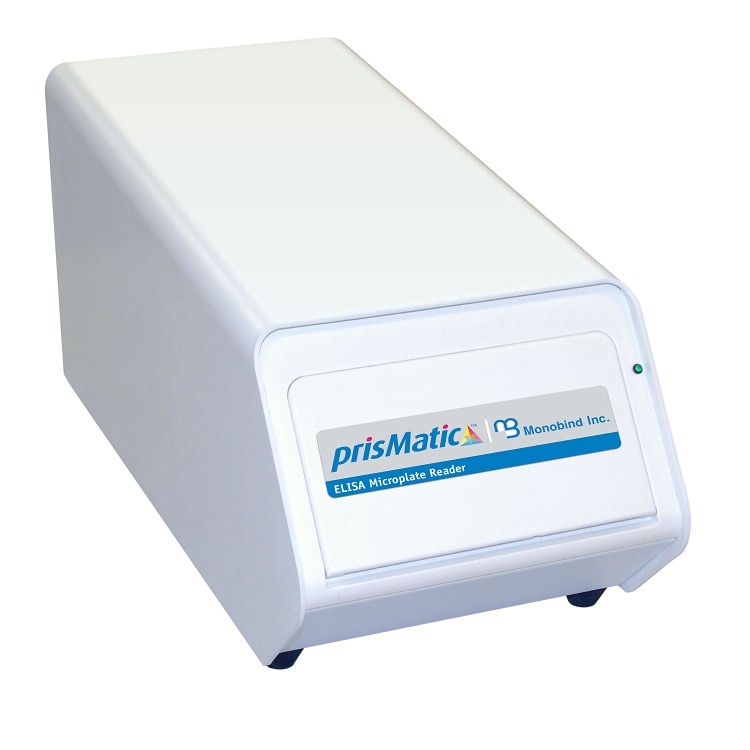
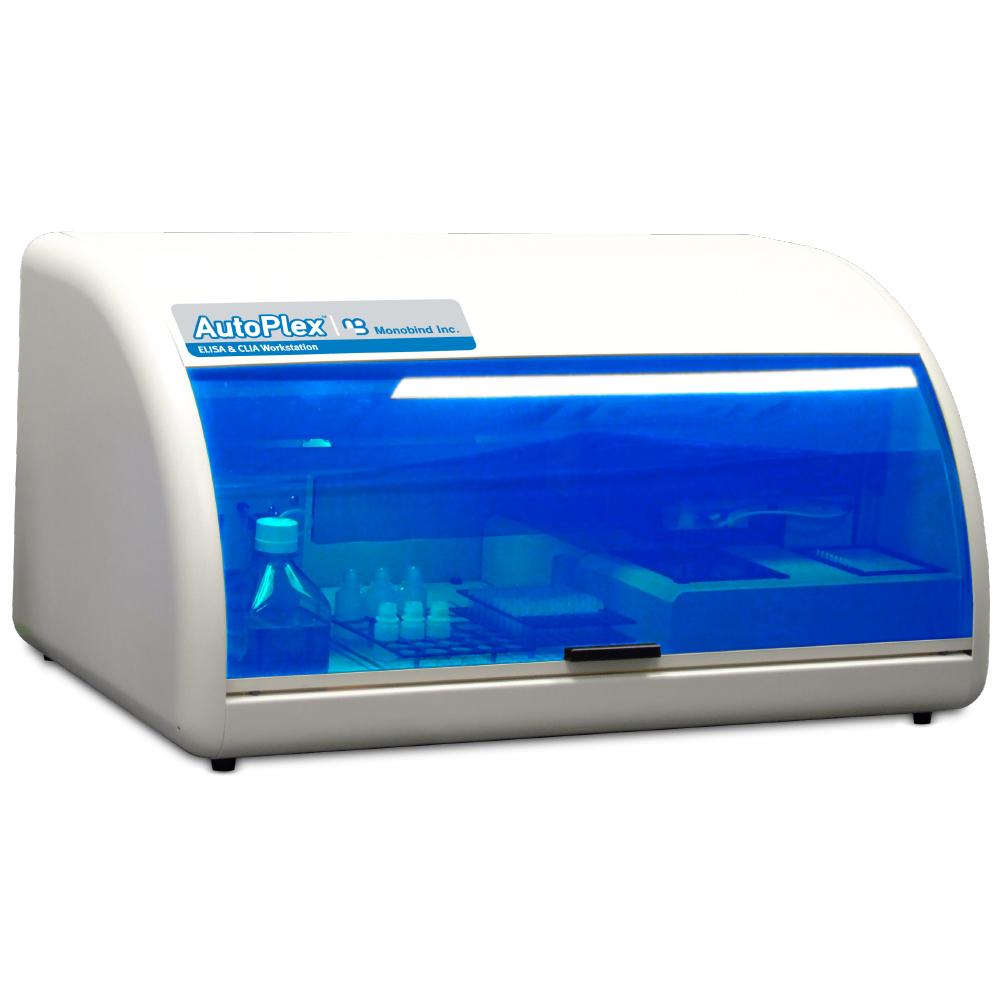
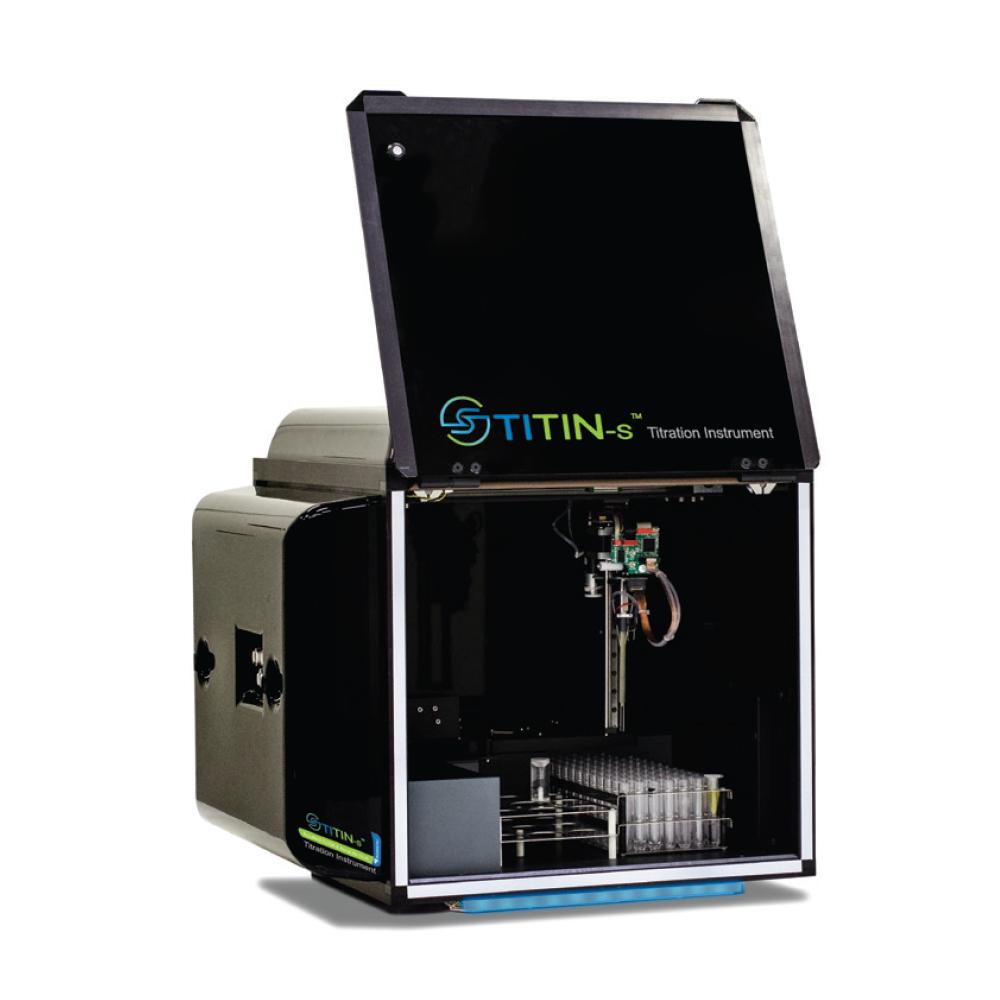
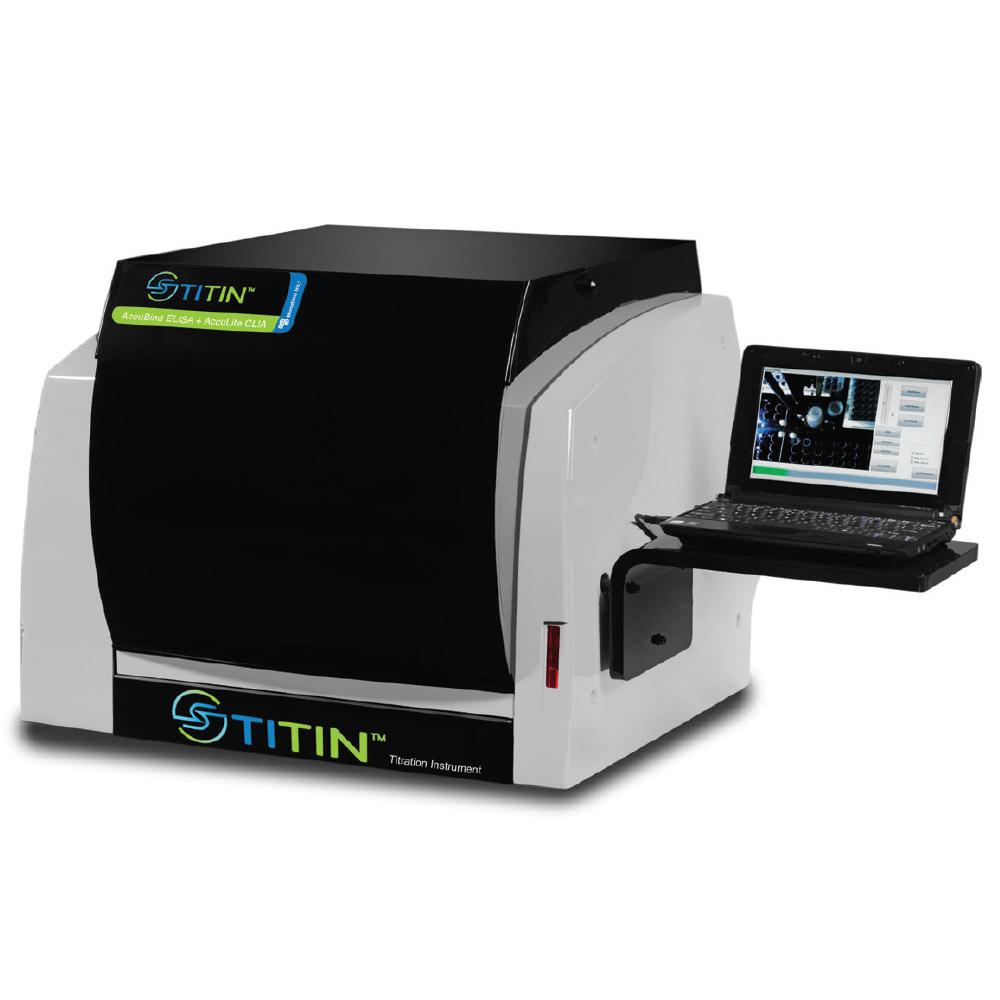
AccuBind kits run manually or on open ELISA processors. Monobind's own analyzers, including AutoPlex®, Titin®, PrisMatic® and NeoEldex, come programmed for AccuBind assays, and Monobind provides applications for many instruments from other manufacturers. Ask Technical Support for the current program for your system.

Quality and support

Manufactured under an ISO 13485-certified quality system. Every lot ships with a Certificate of Analysis, and IFUs and SDSs are online. The Troubleshooting Guide and Good Lab Practices cover common technique questions, and the Assay Support Request reaches Technical Support directly.

Instruments

Monobind instruments for AccuBind® ELISA

Every analyzer below comes programmed for AccuBind assays. All instruments →

ELISA analyzers and washer

Walk-away systems

Frequently asked questions

What does "AccuBind" mean on a Monobind kit?

It identifies Monobind's colorimetric microplate ELISA platform: HRP/TMB detection read at 450 nm, on a streptavidin-, antibody- or antigen-coated plate chosen for each analyte.

Do I need a Monobind instrument?

No. AccuBind kits run on any microplate reader that reads 450 nm, with a 620–630 nm reference filter recommended.

Can I mix reagents between AccuBind kits or lots?

No. Use the components listed on the Certificate of Analysis for your lot.

Does biotin in patient samples interfere?

High-dose biotin can interfere with streptavidin-plate assays. Their IFUs advise collecting samples at least 8 hours after the last high-dose (more than 5 mg/day) biotin intake.

What is the difference between AccuBind ELISA and AccuLite CLIA?

Both use the same microwell format. AccuBind reads color on a plate reader; AccuLite reads light on a luminometer, with shorter incubations (typically 45 plus 5 minutes), no stop solution, and a wider dynamic range with greater low-end sensitivity.

Ready to evaluate AccuBind?

Browse the catalog, request a quote, or ask for IFUs and validation data.

Protocol details vary by kit. Always follow the Instructions for Use (IFU) and Certificate of Analysis (CofA) for your specific Monobind test system and lot.